Keith Cavey is grounded in the belief that healthcare should restore dignity as much as it restores health. As Director of Behavioral Health and a Psychiatric Nurse Practitioner at McGregor PACE, Cavey describes his role simply, “hands down the best position I have ever had in my career.”
Keith is a steady, collaborative PACE presence, part clinician, part guide and part problem-solver. He works closely with social workers, nurse practitioners and physicians to support PACE participants facing mental health challenges. Whether through in-person counseling visits or phone consultations, he helps develop thoughtful treatment plans, carefully managing complex diagnoses and medications. His work reflects a core principle of the program: medical care and life circumstances are inseparable.
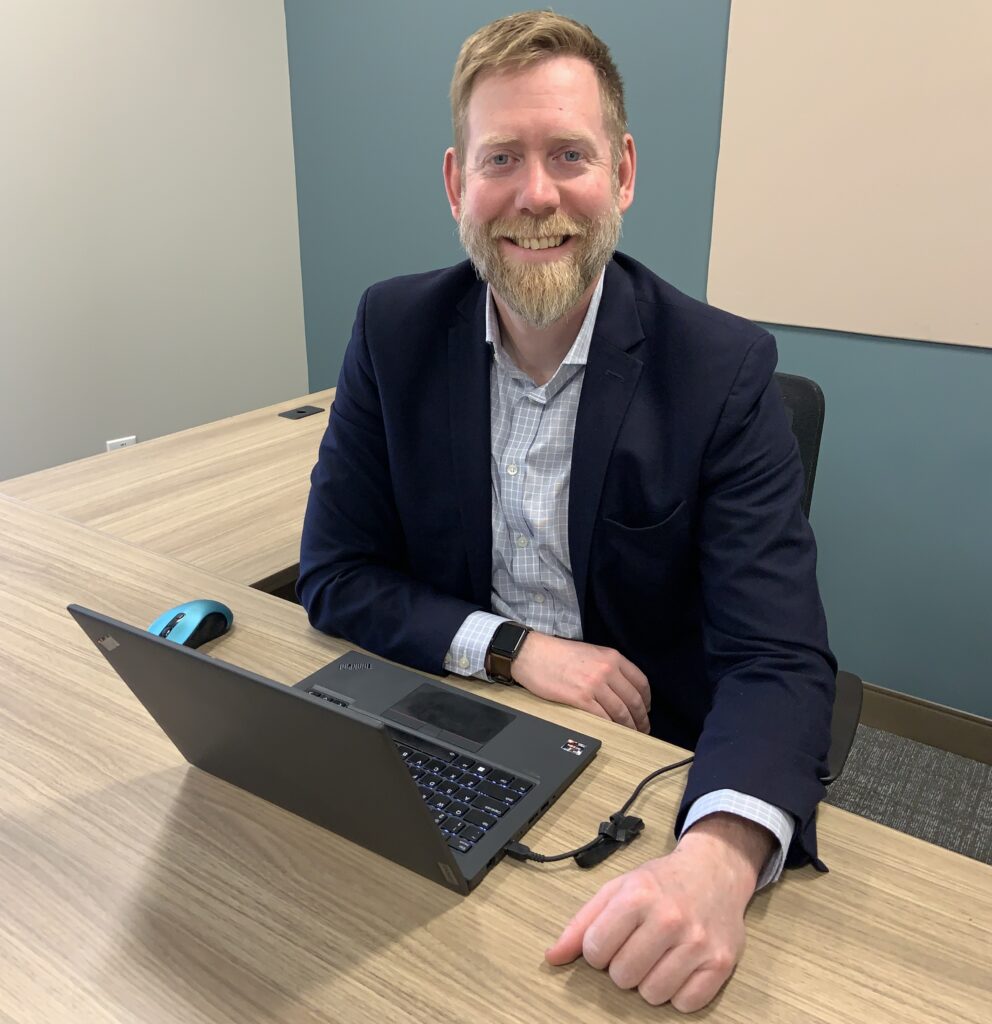
“We follow participants whenever there’s a need,” Cavey explains, “ensuring continuity of care and smoothing transitions as their lives change.”
Keith’s path to this work began after his transition from military service in 2008. Initially pursuing a career as a nurse anesthesiologist, he earned his Bachelor of Science and Arts and spent several years working alongside nurse practitioners in a hospital system. There, he witnessed firsthand the gaps in care, patients discharged too early, confusion around medications and families overwhelmed by systems that felt impossible to navigate. He came to understand that healing isn’t just about treating a condition; it’s about stabilizing a life.
That realization has shaped his career. Over time, Keith developed deep expertise in care coordination, patient advocacy and meeting people on their own journey. His work increasingly focused on vulnerable populations, eventually leading him to the PACE model, where his approach found its fullest expression.
“The PACE model is the only one I’ve seen that truly incentivizes preventive care and keeps people healthy,” he says. “It’s not about how many people you see; it’s about the quality of care you deliver.”
If we could scale this model nationwide, it would solve so many problems and improve care for countless individuals,” says Cavey. “Together, our team asks not just ‘what’s wrong?’ but what’s standing in the way of this person living well? Housing instability, food insecurity, transportation barriers and social isolation are treated with the same urgency as clinical concerns.”
“What I love most,” Cavey shares, “is that in my previous roles prior to PACE, I only saw snippets of people’s lives. Here, I get to be part of the bigger picture. I can provide mental health counseling and help untangle medication regimens for people who’ve seen multiple providers but never had their real issues addressed. I can adjust treatments and actually watch people come back to life. It’s incredibly rewarding.”
#PACE #PACEProgram #NationalPACEAssociation #WeArePACE #PACEWorks #AgingInPlace #BehavioralHealth #McGregorPACE